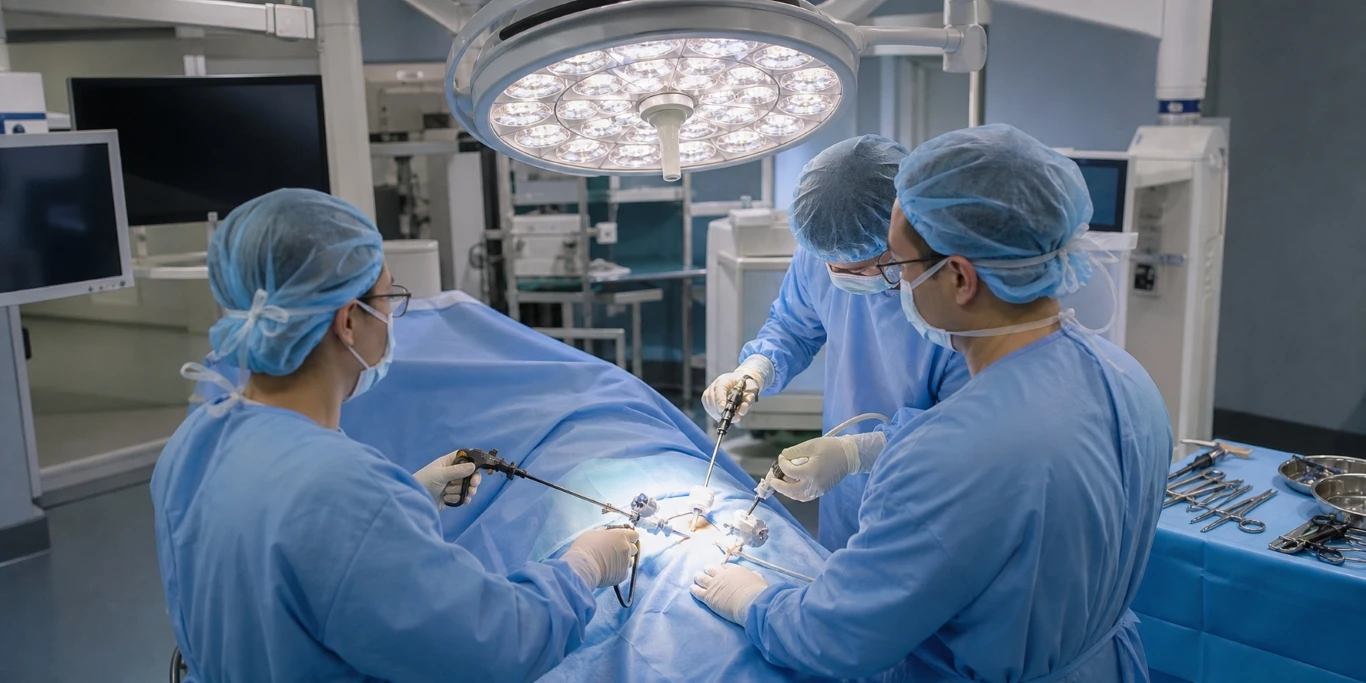

Whether buying a single surgical light for one operating room or multiple surgical lights for a new building, choosing an operating room lighting system is a major decision for any OR manager. Surgical lighting systems are expensive, costing between $10,000 and $30,000 per operating room, and replacement cycles are rarely shorter than 10 years. In addition, poor surgical lighting can prolong procedures and create difficulties for every member of the surgical team. For these reasons, surgical lights should be selected through a careful and systematic process. This article explains who should be involved in the selection process, what factors should be considered, and one subjective method for comparing surgical lights.

People to Consult When Choosing Surgical Lights
The person responsible for the final decision varies from one institution to another. However, many people will have opinions, which makes information gathering relatively easy. The operating room department director or manager should coordinate the selection process and collect the lighting needs, experience, and concerns of different roles.
– Surgeons: Surgeons must be consulted as a group or individually. Their lighting requirements are both general and specific to their specialty. They should be encouraged to carefully examine lighting exhibits at professional meetings and discuss the quality of surgical lighting at other institutions with their colleagues.
– Nurses: Nurses have a wide range of concerns about operating room lights, from staff nurses who operate the lights to head nurses responsible for capital budgets. Like physicians, nurses should discuss lights with colleagues at other hospitals and review lighting exhibits at professional meetings. The AORN Congress provides one of the best opportunities to see most surgical lights available on the market.
– Hospital administrators: Their responsibility is to achieve the best balance between staff satisfaction and cost. In most cases, obtaining funding is also an administrative responsibility.
– Biomedical engineers: Biomedical engineers should evaluate the quality of the electrical, mechanical, suspension, and installation systems of the surgical lights under consideration. They will also want to understand each system’s maintenance requirements, the vendor’s service capability, and the availability of replacement parts.
– Operating room committee: The operating room committee, board of directors, or other internal governing body usually must approve the purchase of surgical lights. Committee members may offer suggestions or at least ensure that all factors have been considered before a choice is made.
– Purchasing agent: In some institutions, the purchasing agent is a key person. He or she may provide information about the reputation and performance of different companies and may be responsible for obtaining competitive bids, helping evaluate those bids, or negotiating the final purchase agreement.
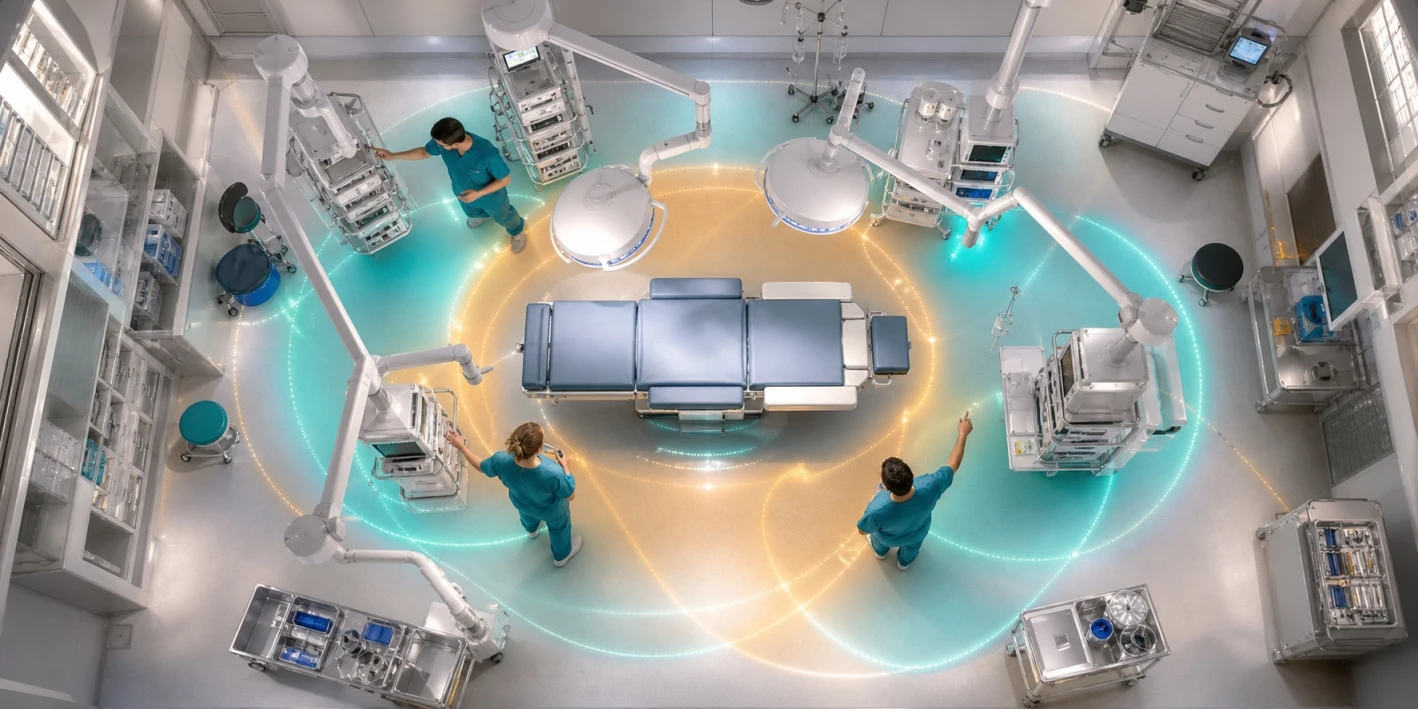
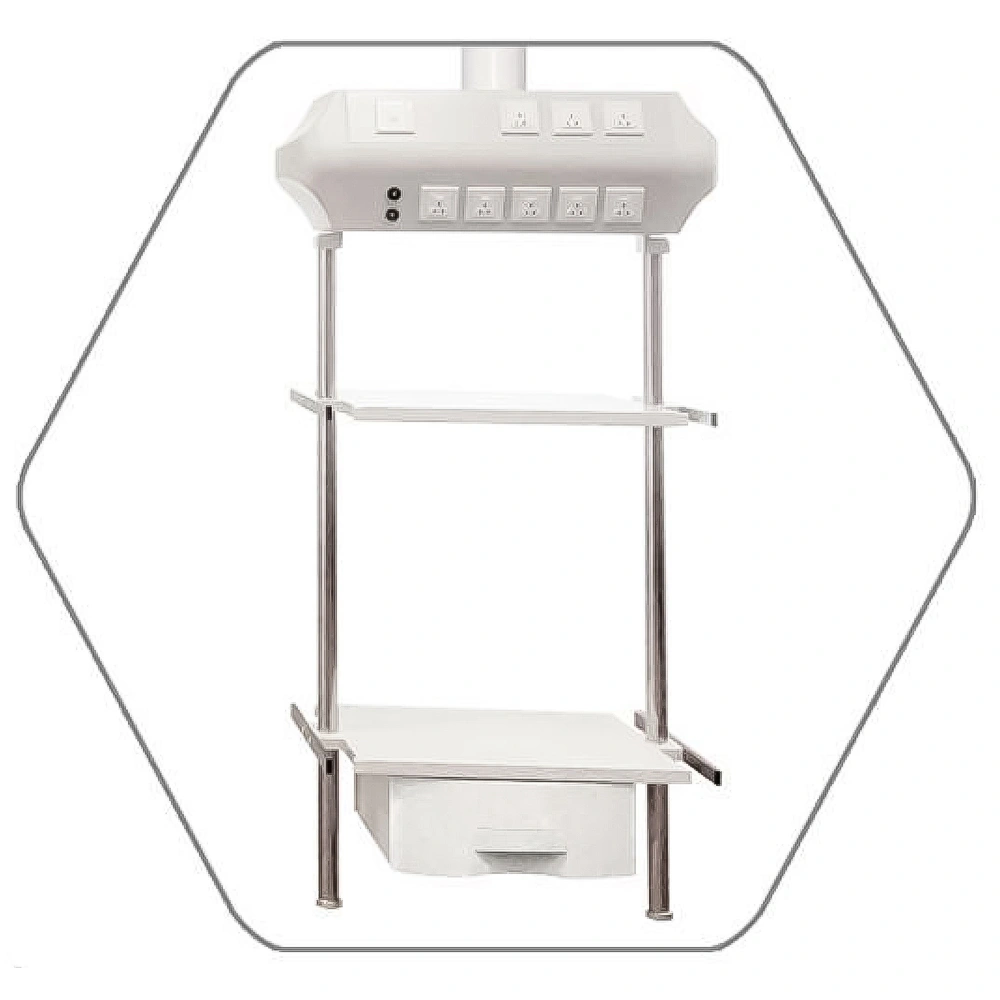
– Architects and engineers: If the lights are part of a construction project, architects and engineers will coordinate the light locations to ensure proper operation and avoid interference with directional air supply or other ceiling-mounted equipment, such as medical gas columns, microscopes, radiology equipment, or IV track systems. They will also coordinate the location and amount of general room lighting so that it works with the surgical lighting system.
– Equipment planner: In large projects, an equipment planner may be hired to identify, specify, and purchase all major movable and built-in equipment. Because planners often select lights primarily on the basis of cost, hospital administrators must clearly communicate their needs and preferences.
Why Surgical Light Specifications Matter
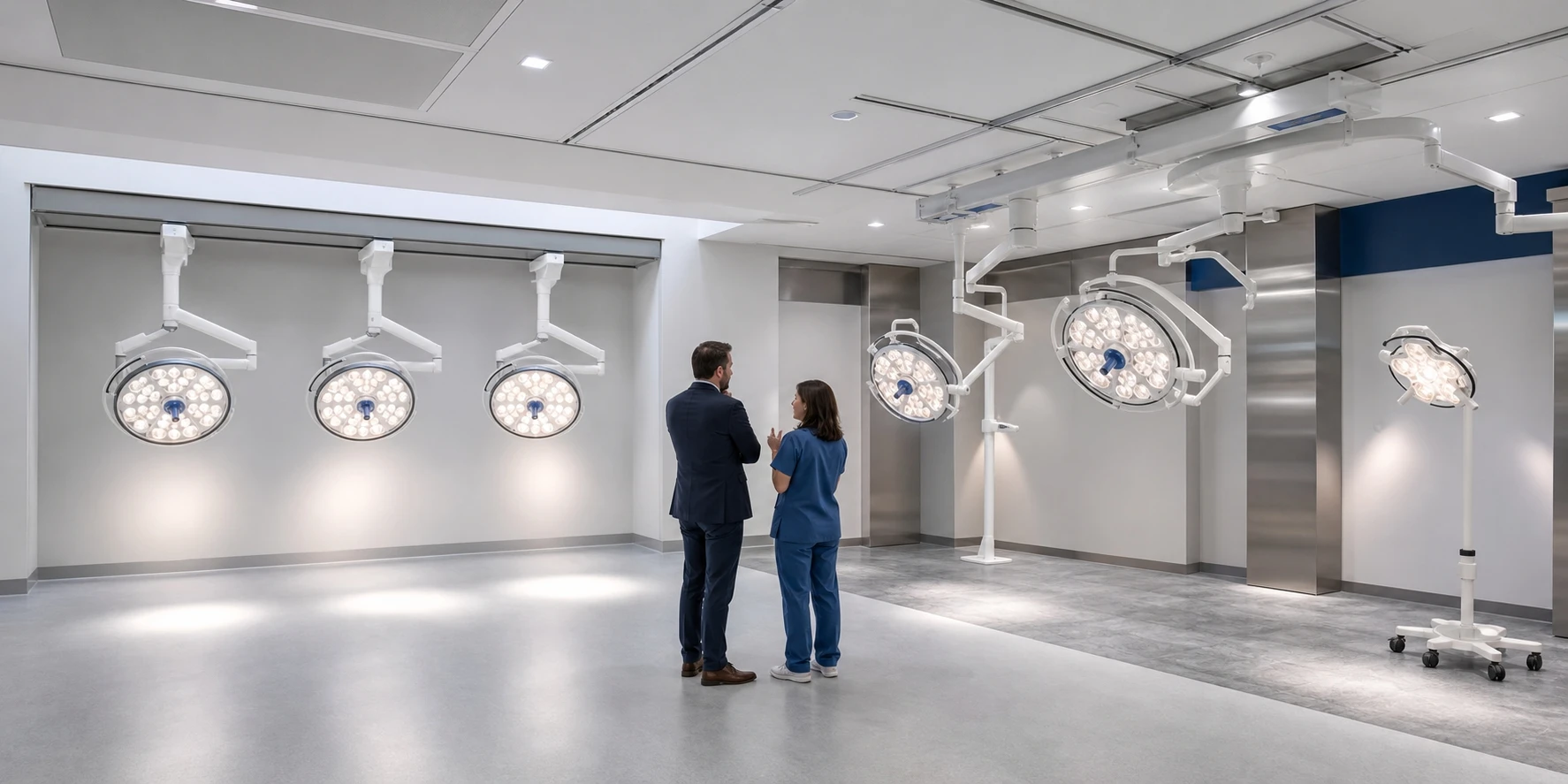
Specifications for surgical lights may be written by the purchasing agent, architect, or equipment planner. The specifications are a detailed list of standards that a product must meet before the institution will accept it, so they must describe every feature and function the hospital requires. Understanding specifications is important because they are the legal description of the product to be purchased; if they are written incorrectly, the surgical light ultimately selected may be replaced by another light.
Standardization vs. Specialization in Operating Room Lighting
The most basic decision is whether all lights in the operating room suite should be the same, or at least come from the same manufacturer, or whether the head nurses and physicians responsible for each specialty should choose the surgical lights that meet their needs. Both approaches have advantages and disadvantages, and the decision should consider cost, installation, operation, maintenance, and surgical scheduling.
– Standardization: Standardization usually simplifies selection, installation, operation, and maintenance, and it often reduces cost. Familiarity with the lighting equipment is also important for nurses and technicians who need to operate different surgical lighting systems efficiently. Even if surgeons and OR nurses agree on one manufacturer, the department still needs to decide whether to use one model throughout or install different models in selected specialty operating rooms. It must also consider whether each specialty may choose any model it wants as long as all models come from the same manufacturer.
– Specialization: If each department chooses its own surgical lights, the decision about which model has the required options belongs to the specialty group. After such a decision is made, some specialty groups may feel that they cannot perform procedures in any other room, which can create conflicts in surgical scheduling. Using several different types of ceiling-mounted systems can also increase design complexity for architects and engineers, usually increase purchase and installation costs, and raise service and replacement-part costs for the maintenance or biomedical engineering department.

Defining Surgical Lighting Needs and Options
Because the market offers countless options and features, understanding the need for surgical lights helps narrow the choices. Some needs may already be clear from the shortcomings of the old lights being replaced. For example, if portable lights are often needed, consider buying a satellite light to supplement the main light or consider a dual-source support system. If dust falls on patients whenever a track-mounted light is moved, consider a pedestal-mounted system. If surgeons and nurses complain about glare or inadequate illumination, consider lights with variable intensity or rheostats. If circulating nurses must reposition the lights frequently, carefully examine shadow elimination and positioning features, or consider an automatic positioning device.
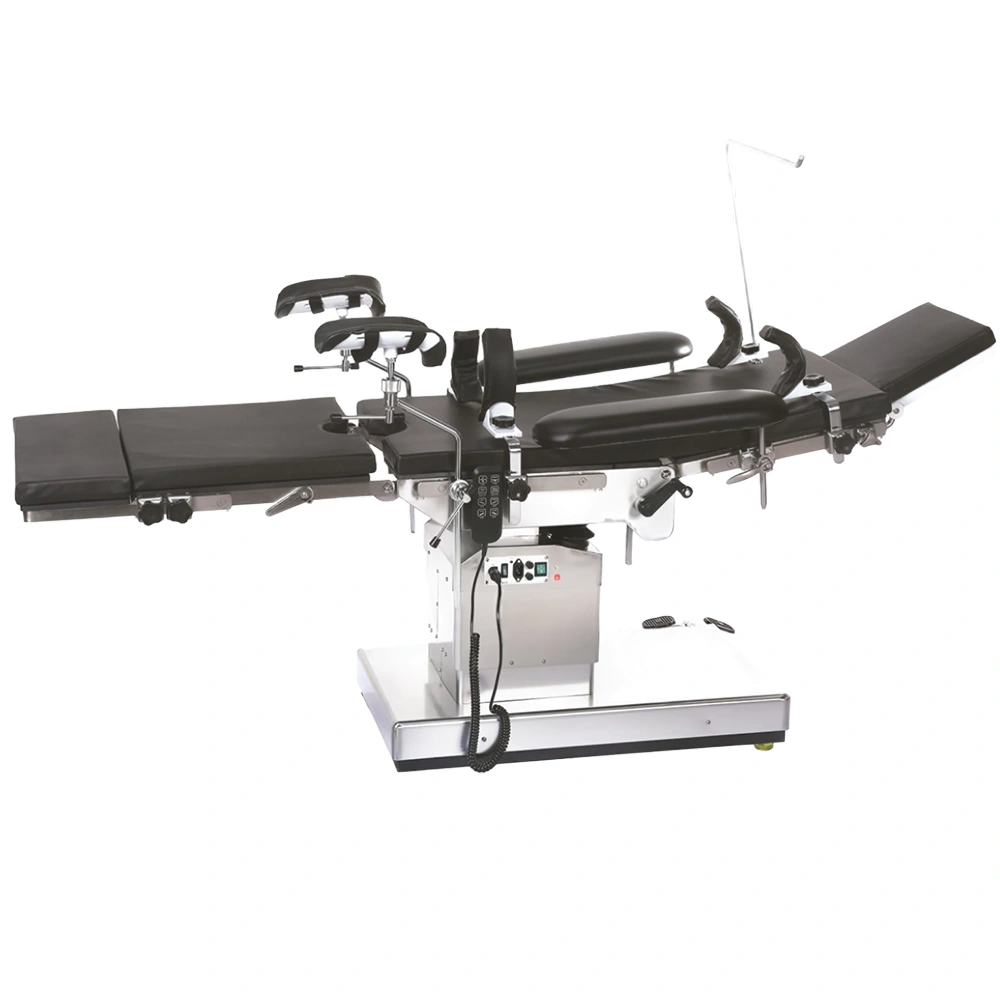
– Patient positions and specialties: Gynecology, orthopedics, plastic surgery, neurosurgery, cardiovascular surgery, trauma, and other specialties have different operating room lighting requirements.
– Intraoperative photography: Some surgical light manufacturers offer systems that can accommodate still photography, video recording, and closed-circuit television equipment. Architects and engineers need to participate in planning intraoperative photography and understand the locations of cameras and monitors, as well as whether audio capability is required.
– Architectural design factors: Architects and engineers should be consulted about the shape and size of the lighthead, especially if it will be used in a vertical or horizontal laminar-flow system. If the building has low or high ceilings, the mounting design must also be discussed to ensure that the light surface is at the correct height above the floor and that the entire unit remains stable.
– Main light and satellite light: When comparing surgical lights, evaluate the main light separately and also in combination with the satellite light. If the satellite light is often used alone to illuminate a second surgical site, it should also be evaluated independently. Both lights should be able to illuminate their respective surgical fields adequately, even if they are designed to work together.
– Obstetric areas: Lighting requirements in obstetric areas have changed in recent years. Traditional delivery rooms require enough light for abdominal procedures, such as cesarean sections and postpartum tubal ligations, as well as procedures in the lithotomy position. Family-style delivery rooms or suites where mothers labor and deliver with family present may require ceiling-mounted examination lights, small portable fiber-optic lights, or ceiling-mounted surgical lights. These lights should also be unobtrusive or concealable so they do not disrupt the room atmosphere.
– Outpatient operating rooms: The growth of outpatient surgery has affected surgical light design. Smaller and less expensive lights have been designed for this market. Although these smaller lights are adequate for many procedures, some more complex procedures performed in outpatient operating rooms require larger lights. The surgical volume of the outpatient operating room should be reviewed to determine whether smaller lights are sufficient or whether a larger lighting system is needed in one or more rooms.
– Emergency department: Emergency departments may also have specific lighting requirements. Most areas need lights designed for minor trauma and wound suturing, but large trauma centers in some hospitals may require multi-field lighting equipment with excellent shadow elimination.

The Surgical Light Selection Process
Lights produced by all major companies meet safety requirements and operate within accepted standards for color, brightness, and usability. After that, the choice depends on personal or institutional priorities, perceptions, and preferences, which are influenced by budget, previous experience, and sales techniques. Engineers have developed precise methods for quantifying illumination, and manufacturers use these measurements to communicate product performance. However, few clinicians can translate objective measurements into an understanding of how the lights will actually perform. The people responsible for purchasing surgical lights should consider the objective technical information provided by manufacturers, while also relying on subjective judgment formed during demonstrations and clinical evaluation.
– Lamp life: Lamp life is an objective measure of the number of hours a bulb can operate before burning out. Lamp life and the method of replacing bulbs have long been important concerns for nurses. Most main surgical lights use multiple bulbs and can operate adequately even if one bulb fails, but some satellite lights are single-bulb units, so it is important to know how quickly the bulb can be replaced. Many clinical engineering and maintenance departments regularly replace all bulbs as part of a preventive maintenance program, which largely eliminates the problem of bulb burnout.
– Heat generation: Heat is produced not only at the light source but also wherever the beam strikes an object. Surgical lights are designed to dissipate heat generated at the light source away from the surgical field and into the room, where the air-conditioning system compensates for it. Heat generated when light strikes an object is caused by radiant energy. Clinicians can test an acceptable radiant energy level of 25,000 μW by drawing a 1-centimeter dot with India ink on the back of the wrist and focusing the light on that spot. If the spot becomes uncomfortable after one minute, that radiant energy level may be harmful to delicate tissue, such as exposed bowel.
– Market information: For a capital expenditure as important as surgical lights, it is worth investing time and effort to research the lights available on the market. Sales representatives should be consulted, their materials should be reviewed, and exhibits at trade shows should be visited.
– Clinical evaluation: Do not make a hasty decision about surgical lights costing $10,000 to $30,000 per room without personally testing the equipment. For an expense of this size, it is reasonable to ask suppliers to provide lights for a trial period.
What to Evaluate During a Clinical Trial
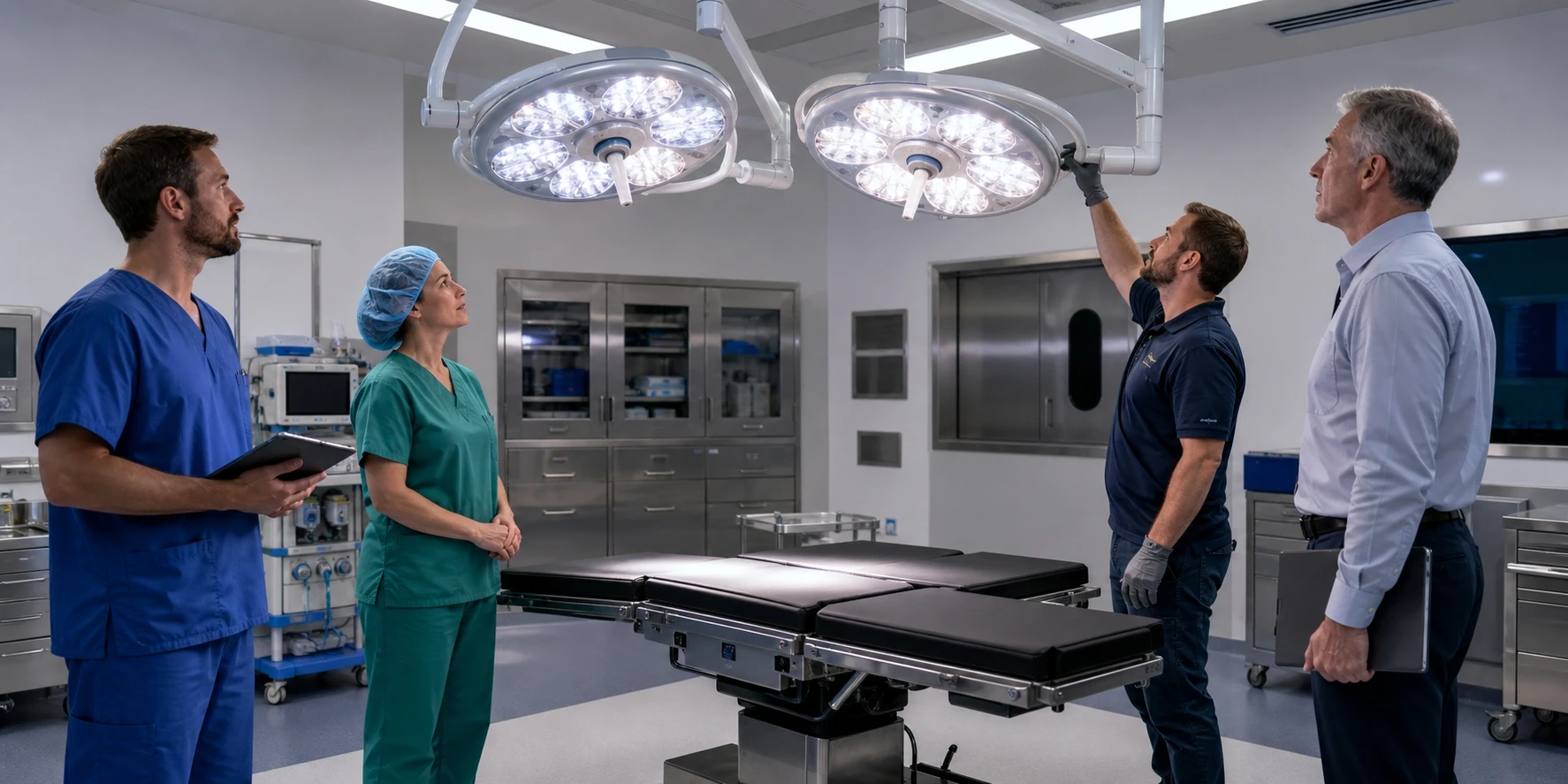
During the trial period, the lights should be observed and evaluated in real use conditions as much as possible. The trial should cover different types of procedures and patient positions, and should involve the maintenance department, clinical engineers, sales representatives, and operating room staff so that judgment can be formed from operation, training, maintenance, and actual lighting performance.
– Choose a trial period of at least 30 days, and avoid conflicts with professional meetings. If several surgical lights are being evaluated, schedule their trial periods as close together as possible.
– Select rooms that can accommodate a variety of procedures and patient positions so that different departments can evaluate the lights under different conditions. Determining how well the lights adapt to different procedures and patient positions is a key factor.
– Coordinate with the maintenance department and clinical engineers for installation and removal of demonstration lights, giving them an opportunity to evaluate the system. Sales representatives should also inspect the lights several times during the evaluation period and provide extra bulbs.
– Ask the sales representative to provide in-service training for all operating room staff on proper use of the lights.
– Post sales materials and any other available literature in the room where the light is being used.
– Ask the sales representative for a list of hospitals or outpatient surgery centers using the company’s lights. Call the operating room department directors at those facilities to ask what problems they have encountered, what nurses and physicians think of the lights, how the lights were originally selected, and to request a contact person with whom your clinical engineer can discuss maintenance issues.

Evaluation Questionnaire for Surgical Lights
Ideally, everyone who uses the demonstration light should complete an evaluation questionnaire (Table 1). A simple way to distribute and collect questionnaires is to hang one envelope containing blank forms and another envelope for completed forms beside the product materials in each room where a demonstration light is placed. Price information should not be shared with clinical evaluators because some people may focus too much on a difference of a few hundred dollars between systems that cost thousands of dollars; if the lights will be competitively bid, the list price may have no relation to the bid price submitted by the vendor; and the evaluation process should reduce the importance of cost as the deciding factor.

Evaluation Criteria for Operating Room Lighting
Lighting performance can be divided into many small factors. Combining these factors into several broad categories provides an analysis method that is less exhaustive but more likely to reflect preferences accurately. A continuous scale is a format that most people can use easily, and it can be readily converted into numerical scores.
– Ease of positioning: Objectively, ease of positioning can be expressed by the amount of force, measured in pounds, required to move the light and by measurement of any drift. Drift means a change in position after the light has been set. Subjectively, the main issue is whether nurses and physicians can easily place the light where they want it and whether the light remains in place. Other considerations include whether handles are available where needed, whether handles attach easily and remain durable under frequent sterilization, whether disposable covers fit over the handles, and whether the vertical range of motion meets the needs of lithotomy and lateral positions.
– Shadow elimination: Objectively, shadow elimination can be described by the percentage of total foot-candles reaching the surgical field when a specified percentage of the light beam is blocked. Subjectively, shadow elimination can be understood as: “How many heads and hands can be in the field while the view remains clear?” One of the most difficult positions to illuminate without shadows is the lithotomy position, where the surgeon is seated and the light is behind the surgeon’s head. Each light should be evaluated in this position.
– Focus factors: Objectively, the focal point is where the light beams converge and where the illuminated pattern is brightest. Many surgical lights are designed to provide depth of focus rather than a single focal point (Figure 1). Subjective evaluation of focus performance involves comments about spot size and variation, brightness at each spot size, spot quality, and ease of focusing. Questions to answer include whether the surgeon needs a headlight because the center of the spot is not focused; whether different spot sizes are used or whether the light is always set at one particular spot size; and whether the light must be adjusted to refocus each time it is repositioned.
– Intensity: Objectively, light intensity can be expressed in foot-candles, lux, or foot-lamberts. Subjectively, brightness is judged by whether the light is bright enough to allow the current task to be seen comfortably. It is affected by the surgeon’s eyesight, the lighting level in the rest of the room, glare from instruments and sponges in the field, and the color of objects and tissues in the field (Figure 2). If the satellite light and main light will be used for two-field surgery, their intensity should be evaluated independently.
– Color: Objectively, degrees Kelvin (°K) describe whether light tends toward the red or blue end of the spectrum (Table 2). Subjectively, surgeons feel that colors look most “true” under light similar to noon on a cloudless day, about 5,000°K. The acceptable color temperature range is between 3,500°K and 6,700°K. Very blue light or very yellow light is generally believed to reduce the ability to distinguish cyanosis, tissue perfusion, jaundice, and color changes in anatomical structures. Color perception is also affected by the color of general lighting and by surrounding surface colors.
– Overall rating: The overall rating must be subjective because there is no reasonable way to score objective criteria. Staff may also have difficulty distinguishing among individual performance factors, especially because they overlap. Overall satisfaction with a surgical light may be the only thing some people can identify, but this overall impression is useful information.
– Comments: Asking for positive comments allows people to identify other features that are important to them and/or give specific reasons for their scores. Asking for negative comments allows people to identify problems with the lights.
– Identification: Requiring evaluators to provide their names and titles may or may not be appropriate in a particular hospital. Knowing these titles helps determine whether nurses, technicians, or physicians agree.

Summary
Based on the preceding factors, a profile can be prepared for each surgical light. Once the profiles are complete, they should be submitted to the operating room committee or the evaluation group responsible for making the final decision. This information will allow the group to compare different surgical lights and use the profiles as the basis for a final purchase decision or detailed bid specifications. If cost is a major factor in the decision, the evaluation results can help justify purchasing a more expensive light that users consider clearly better. Although the result of this selection process is clearly a subjective decision, it is an informed subjective decision.
The profile should include the following information:
– Product literature containing detailed information about the surgical light.
– Average scores in the six questionnaire categories.
– A summary of positive and negative comments from the questionnaire, with repeated comments identifying important factors.
– Recommendations from other hospitals using the light.
– Warranty and service information, plus any relevant information about the vendor and manufacturer.
– Information or opinions from clinical engineers, the purchasing agent, and architects/engineers.
– Information about possible purchase agreements.